
Make in India needs policy support for access to markets.
The panel may include or seek inputs from former RBI Governor Urjit Patel, former chief economic advisor Arvind Subramanian, Sajjid Chinoy of the PM-EAC, Rathin Roy, among others.

The Opposition on Monday charged the government with trying to promote crony capitalism, creating fear by giving "unbridled power" to taxmen, trying to snoop into people's lives through increased use of Aadhaar through the provisions of the Finance Bill.

They all seem to forget that the Music Academy is as much an independent institution as T M Krishna is an individual musician. In drawing those red lines for the Academy management, they do not even seem to recognise that they too have crossed a red line themselves, points out N Sathiya Moorthy.

Government looking at cushioning slowdown due to demonetisation with sops and higher outlay for micro, small and medium enterprises, agriculture, and affordable housing.

We asked colleagues, present and past, to reflect on a man who has made such a difference to their lives and careers. Here it is then, a rich collection of memories that offer enchanting glimpses of the enigmatic Ajit Balakrishnan.

'This is a historical moment in the political history of Sri Lanka.' 'You can see the amount of pressure that is coming from the people because nobody addressed the policy blunders, multiple corruption charges and huge scandals.'

The Union government has no 'Buy India' policy, but has a 'Buy Air India' policy.

'A buoyant market economy is one which is led by the innovation and imagination of private persons,' notes Ajay Shah.
The government will find it difficult to pass the Bill without the Congress's help

'The hour is very late, and the choice between triumph and tragedy knocks at our door,' says Ajay Shah.

How do we get back to higher trend growth? The heart of the problem lies in private corporate investment, recommends Ajay Shah.

Several speakers noted that Budget carried the weight of expectations.

The Modi government has handled inflation far better than any government in the past two decades. Both the stock market and currency indices have begun to show confidence in the economy, despite the mounting global headwinds of trade.

'Rahul inspired Indian industry with an ethos, an ethos of being more confident, more independent, more thorough, more competitive, more generous, more public-spirited, and more national and more international all at once,' remembers Naushad Forbes.

'An area of land has already been earmarked for their protected habitation.' 'There are also steps being taken to take care of the coral zone and mangroves.'
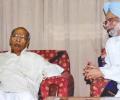
'Narasimha Rao asked me why China was doing so well in attracting foreign investments and I gave my frank opinion.' 'I told him that giving thrust to exports had to be a national effort.' 'But in India, the system was very centralised in the Government of India and the state governments had no role to play.'
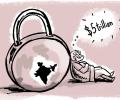
It would be a difficult task for the Indian economy to reach the $5-trillion mark a year before the International Monetary Fund (IMF) projection of 2026-27. Pankaj Chaudhary, minister of state for finance, said in the Rajya Sabha on Tuesday that the government is taking steps to make the country a $5-trillion economy at a date earlier than the IMF's projection. In that context, it would not be difficult to meet the projection in the third quarter of FY27.
Some say the MPC will raise the rate, while others are of the view that there is already de facto interest rate tightening through rising bond yields, which might prompt the central bank to go for a pause.

Accelerating inequality, the market dominance of tech platforms and remote working are likely to be the longest-lasting legacies of the COVID-19 crisis, the WEF said in a report on Monday. Releasing its Chief Economists Outlook report during the online Davos Agenda Summit, the WEF said that beyond managing the pandemic and vaccine rollout, these trends could shape a new era of fiscal, monetary, and competition policy. Deglobalisation is seen as the least likely of the current trends to continue in the longer term; particularly as international coordination is key to resolving global challenges such as vaccine manufacturing and distribution.

After a hiatus of nearly two decades, the government's programme to privatise state-owned firms restarted with the handing over of debt-laden national carrier Air India to the Tata Group. With the new owner shelling out Rs 18,000 crore for the buyout of the 'Maharaja', this would be the highest-ever amount garnered through privatisation, and is even more than the cumulative sum mopped up through strategic sales from 1999-00 to 2003-04. The government had in October last year inked the share purchase agreement with the Tata Group for sale of national carrier Air India for Rs 18,000 crore. Tatas would pay Rs 2,700 crore cash and take over Rs 15,300 crore of the airline's debt.
'If some measures are implemented quickly, they can help revive growth.'
The RBI expects change, presumably commencing in the next Budget, but must hold its current view until this actually happens.

2015 is going to witness new agreements on climate change.
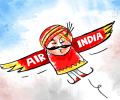
With the new owner shelling out Rs 18,000 crore for the buyout of 'Maharaja' this would be the highest ever amount garnered through privatisation or even the cumulative sum garnered through strategic sale in 1999-00 to 2003-04. The government had garnered roughly over Rs 5,000 crore during that five-year period by privatising 10 CPSEs.

RBI governor Raghuram Rajan and the government are working towards financial inclusion.

The ripples from November 8 may be seen in next year's state budgets.

In the midst of third wave of COVID-19, Finance Minister Nirmala Sitharaman has come up with an impactful Budget which is balanced, fiscally prudent and growth-oriented, the USA India Chamber of Commerce has said. President of the Boston-based USA India Chamber of Commerce (USAIC) Karun Rishi, however, said it is a matter of concern that the budget lacks tangible measures to increase revenue generation. "Opting to keep the fiscal deficit at 6.9 per cent and increase capital expenditure by 35 per cent is a masterstroke. "The annual budget estimates the effective capital expenditure of Rs 10.68 lakh crore in 2022-23, making up about 4.1 per cent of the GDP," he said. "A phenomenal increase in the government's capital expenditure is likely to facilitate the expenditures on infrastructure and create jobs.

In eight cases, the banks would violate the minimum public shareholding norms if their promoter, the Government of India, infused capital as announced.

Senior bureaucrats say the government has planned a 'feel-good' Budget after the 'pain' of demonetisation.

Firms that should borrow abroad do not do so enough, and those that should not borrow abroad do.

The recent agreement between the RBI and the Centre marks a significant step forward toward financial inclusion.

The finance minister may stagger some of the recommendations.

Nothing, according to Deepak Lal. He argues that the contemporary attempts to control immigration in the US and UK are not nativist.

While buying health policies, customers should reveal any pre-existing diseases. This is the only way to ensure that the insurer does not reject claims.
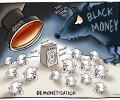
Months before 8/11, MP, Haryana probed note ban

Corporate India at present is more indebted than all state govts put together.

'For a responsible person like him to utter such nonsense is shameful.' 'He is not fit to be a director on the RBI central board.'

The oil crisis could not have come at a worse time for the Modi government as its tax collection has fallen short of its 2020-2021 target by Rs 5.2 lakh crore.

'Given the possibility that our unstable northern and western borders may become 'live' at short notice, any major systemic change which impacts combat effectiveness should be brought about in a cautious and progressive manner.'
